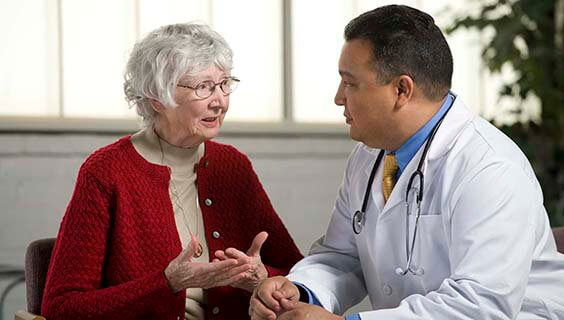
Becoming a caregiver is an extremely rewarding experience. It’s an opportunity for you to give back to a parent or family member who has given so much of their time to you, and now you’re returning the favor. Yet, this shift in roles can also be a source of guilt or stress over providing adequate care for your loved one.
Life Care Services understands the pressure caregivers are under and want them to know we’re here for you. To learn about tips you can follow to start alleviating some of your stress and start providing capable care, CLICK HERE.
Have you ever felt dizzy, lightheaded, or as if the room were spinning around you? These can be troublesome sensations. If the feeling happens often, it could be a sign of a balance problem.
Balance problems are among the most common reasons that older adults seek help from a doctor. They are often caused by disturbances of the inner ear. Vertigo, the feeling that you or the things around you are spinning, is a common symptom.
Having good balance means being able to control and maintain your body’s position, whether you are moving or remaining still. Good balance helps you walk without staggering, get up from a chair without falling, climb stairs without tripping, and bend over without falling. Good balance is important to help you get around, stay independent, and carry out daily activities.
Balance disorders are one reason older people fall. Learn more about falls and falls prevention from NIA. Visit the website of the National Institute on Deafness and Other Communication Disorders for information on specific balance disorders.
Retirement is a wonderful time to explore newfound freedoms, enjoy some well-earned relaxation, and grow as individuals. Finding fulfillment in retirement isn’t the same for everyone. Different interests and goals mean every person has the ability to create a custom plan of what retirement looks like for them.
There is a misconception that determining how to thrive in retirement solely depends on your financial outlook. In reality, flourishing in retirement is about creating a plan that will help you embody an enjoyable, healthy lifestyle.
If you are looking for ideas about how to make a retirement plan that fits your interests and goals, you’ve come to the right place. Life Care Services® has put together several retirement tips that seniors can use to thrive. To learn more, CLICK HERE!
Protecting our mental health and mental wellness is easier said than done. We tell ourselves to smile or find the good in life, but the truth is, some days can be hard.
The issue of senior mental health is in a category of its own. According to the Pan American Health Organization (PAHO) and the World Health Organization (WHO), at least one in four older adults experiences a mental disorder, with depression being the most common issue. People aged 85 and older also have the highest suicide rate of any age group.
As we get older, fears may creep in if we have to navigate any of the following:
Depression and/or anxiety from isolation
Mobility issues
Disrupted daily routine
Lack of regular exercise
Dietary changes
To protect our overall health, it’s important to maintain positive mental health as we age. There is so much for seniors to experience. With a little help, you may find that your mental wellness can be better than ever.
To learn about mental health tips for seniors, CLICK HERE.
Exercise and physical activity are good for just about everyone, including older adults. No matter your health and physical abilities, you can gain a lot by staying active. In fact, studies show that “taking it easy” is risky. Often, inactivity is more to blame than age when older people lose the ability to do things on their own. Lack of physical activity also can lead to more visits to the doctor, more hospitalizations, and more use of medicines for a variety of illnesses.
Including all 4 types of exercise can benefit a wide range of areas of your life. To learn how staying active can help you, from the National Institute on Aging, CLICK HERE.
Bone density isn’t something most of us think about — until that moment when, out of the blue, we break something.
“Probably 50 percent of women and 25 percent of men are expected to have an osteoporosis-related fracture in their lifetime,” explains Joy Wu, M.D., associate professor of medicine and endocrinology at Stanford Health Care. But there are ways to know, long before you break a bone, whether you’re losing skeletal mass — and to take steps to protect yourself. “Ultimately, we are most worried about hip fractures,” Wu says.
But simple lifestyle changes can help reduce your fracture risk, and effective medications are available if needed. The earlier you can get diagnosed and start a treatment protocol, the better the outcome.
To learn about five things to look out for, from AARP, CLICK HERE.
A diagnosis of Alzheimer’s disease can be difficult, but getting accurate information and support can help you know what to expect and what to do next.
From learning about Alzheimer’s disease and getting regular medical care to finding local services and support and beginning some legal, financial and long-term care planning, the National Institute on Aging has put together a great checklist. To view their recommendations, CLICK HERE.
Alzheimer’s disease is a leading cause of death in the United States, and millions of Americans are affected by the disease. It’s important to distinguish the facts from the myths about Alzheimer’s, especially when it comes to finding information online.
To learn about 11 common myths surrounding this disease from the National Institute on Aging, CLICK HERE.
Our community is carefully monitoring current Delta variant positivity rates in the area. Resident and employee safety is our top priority, and our policies are based on local, state and federal guidance. With questions on current policies related to resident safety, please contact our team directly.
Sometimes an older adult’s need for additional help is obvious. It could be that he or she is having a hard time getting to appointments, seems confused by instructions or perhaps isn’t paying bills on time. More often, though, the change happens gradually. That’s where a professional assessment comes in. This comprehensive review of all aspects of person’s mental, physical and environmental condition is one way to determine if your loved one needs assistance. This helps to evaluate his or her ability to remain safely independent and identify risks and ways to reduce them.
A family member or caregiver also has an opportunity to evaluate how a loved one is doing in terms of health, safety and quality of life. To learn about red flags suggested by AARP that you may want to look out for, CLICK HERE.